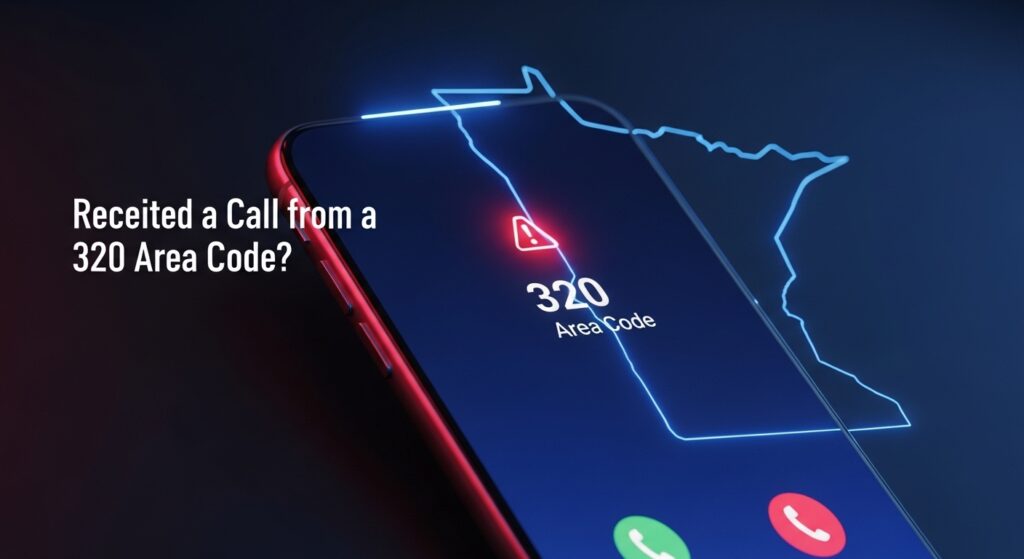
You just looked at your phone and saw a number starting with 320.
Now you’re wondering: Who is calling me? Is this spam? Should I answer?
If you’ve received a call from a 320 area code, this guide will explain exactly what it means, where it’s from, and whether you should be concerned.
Let’s break it down in simple terms.
What Does It Mean If You Received a Call from a 320 Area Code?
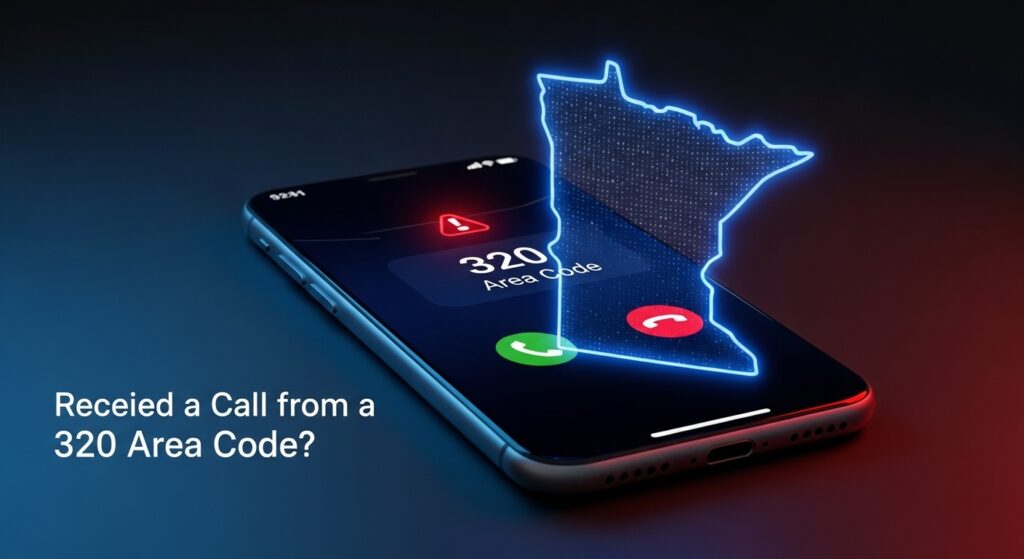
If you received a call from a 320 area code, it means the phone number is registered in central Minnesota, United States.
The 320 area code is a legitimate North American Numbering Plan (NANP) code. It is not automatically spam. However, like any area code, scammers can spoof it.
Quick Answer (Featured Snippet Ready):
The 320 area code serves central Minnesota. If you receive a call from it, the caller is either located in that region or using number spoofing. Always verify unknown numbers before responding.
📍 Area Code 320 Location Explained
4The area code 320 location covers central Minnesota. It was created in 1996 when it split from area code 612.
Major cities and towns include:
- St. Cloud
- Brainerd
- Willmar
- Alexandria
- Sauk Centre
So if you know someone in central Minnesota, the call could be legitimate.
Is the 320 Area Code Legitimate?
Yes. The 320 area code is officially assigned and regulated in the U.S.
It is not a scam code by default.
However…
Scammers often use number spoofing. That means they fake caller IDs to look local and trustworthy.
So even if it looks like a local Minnesota number, it might not actually be calling from there.
Why You Might Be Getting 320 Area Code Spam Calls
🚨 Area Code 320 Spam Calls: What’s Happening?
Many people report area code 320 spam calls that include:
- “Your car warranty has expired”
- IRS tax threats
- Fake Amazon charges
- Debt collection scams
- Robocalls with no response
These calls are not from Minnesota businesses. They are often spoofed.
Why scammers use local numbers
Scammers use local area codes because:
- You’re more likely to answer
- It feels familiar
- It increases trust
- It bypasses some spam filters
This tactic is called neighbor spoofing.
How to Check a 320 Phone Number
If you received a call from a suspicious 320 phone number, here’s what you can do:
Step 1: Don’t answer immediately
If it’s important, they’ll leave a voicemail.
Step 2: Google the number
Search the full number. If it’s spam, others likely reported it.
Step 3: Use reverse lookup tools
Websites like Whitepages or Truecaller can identify reported numbers.
Step 4: Check voicemail carefully
Scam voicemails often:
- Create urgency
- Ask for payment
- Threaten legal action
- Request personal info
Never call back immediately without verifying.
Common Area Code 320 Scams
⚠️ Area Code 320 Scams to Watch For
Here are the most reported area code 320 scams:
1. IRS or Tax Scam
Caller claims you owe taxes and must pay immediately.
2. Bank Fraud Alert Scam
Fake message about suspicious charges.
3. Social Security Suspension
Threatens to suspend your SSN.
4. Tech Support Scam
Claims your computer has a virus.
5. One-Ring Scam
Phone rings once. You call back and get charged.
All of these are red flags.
When Is a 320 Area Code Call Legitimate?
Not every call is spam.
It could be real if:
- You have family in Minnesota
- You applied for a job in that region
- You contacted a Minnesota business
- A hospital or clinic is returning your call
- It’s a local government office
If you’re expecting a call from Minnesota, it’s probably fine.
Real-Life Conversation Examples
Example 1: Spam Call
Caller: “This is the IRS. You owe back taxes.”
You: (Hang up immediately)
Example 2: Legitimate Call
Caller: “Hi, this is St. Cloud Clinic returning your appointment request.”
You: “Yes, I submitted that yesterday.”
Context matters.
Should You Call Back a 320 Number?
Ask yourself:
- Did they leave a clear voicemail?
- Are you expecting a call?
- Does the message create panic?
- Are they asking for money?
If it feels urgent and threatening, don’t call back.
If it’s professional and specific, verify the business independently and call their official number instead.
How to Block 320 Area Code Spam Calls
If you’re getting repeated spam:
On iPhone:
Settings → Phone → Silence Unknown Callers
On Android:
Phone app → Settings → Block numbers
Use Third-Party Apps:
- Truecaller
- Hiya
- RoboKiller
You can also register on the National Do Not Call Registry in the U.S.
Does a 320 Area Code Mean the Caller Is in Minnesota?
Not always.
Because of:
- Number portability (people move but keep numbers)
- VoIP services
- Spoofing technology
A caller can appear to be in Minnesota while actually being overseas.
So location alone is not proof of legitimacy.
When NOT to Worry About a 320 Call
You likely don’t need to worry if:
- It rings once and stops
- No voicemail is left
- You have contacts in Minnesota
- The voicemail is professional and detailed
But always stay cautious.
Common Misunderstandings About the 320 Area Code
❌ Myth 1: All 320 numbers are scams
False. It’s a real U.S. area code.
❌ Myth 2: It’s an international number
No. It’s domestic U.S.
❌ Myth 3: Blocking 320 stops all spam
Scammers use many area codes.
Why Local Area Codes Are Targeted by Scammers
Scammers prefer local numbers because:
- You answer faster
- You trust local businesses
- It looks familiar
This strategy increases scam success rates.
That’s why area code 320 spam calls may feel personal.
Frequently Asked Questions (FAQ)
1. Where is the area code 320 location?
Area code 320 serves central Minnesota, including St. Cloud, Brainerd, and Willmar.
2. Is the 320 area code safe?
Yes, it’s a legitimate U.S. area code. However, scammers can spoof it.
3. Why am I getting area code 320 spam calls?
Scammers use local area codes to increase the chance you’ll answer. This is called neighbor spoofing.
4. How do I stop 320 area code scams?
Block the number, report it to your carrier, and use spam filtering apps.
5. Should I call back a missed 320 phone number?
Only if you verify it first. If no voicemail is left, it’s safer not to call back.
Q: What does it mean if I received a call from a 320 area code?
A: It means the number is registered in central Minnesota or is being spoofed to appear that way.
Q: Is area code 320 associated with scams?
A: The code itself is legitimate, but scammers may spoof it.
Q: What cities use area code 320?
A: St. Cloud, Brainerd, Willmar, Alexandria, and surrounding areas.
Q: How can I check a 320 phone number?
A: Use reverse lookup tools or search the number online for spam reports.
Final Thoughts: Should You Be Concerned?
If you’ve received a call from a 320 area code, don’t panic.
The 320 area code is a real Minnesota code. But like any area code, it can be misused through spoofing.
Here’s what matters most:
- Verify before responding
- Never share personal info
- Don’t panic over threats
- Block repeated spam
Stay cautious. Stay informed.
And remember — an area code alone doesn’t determine trust. Your judgment does.