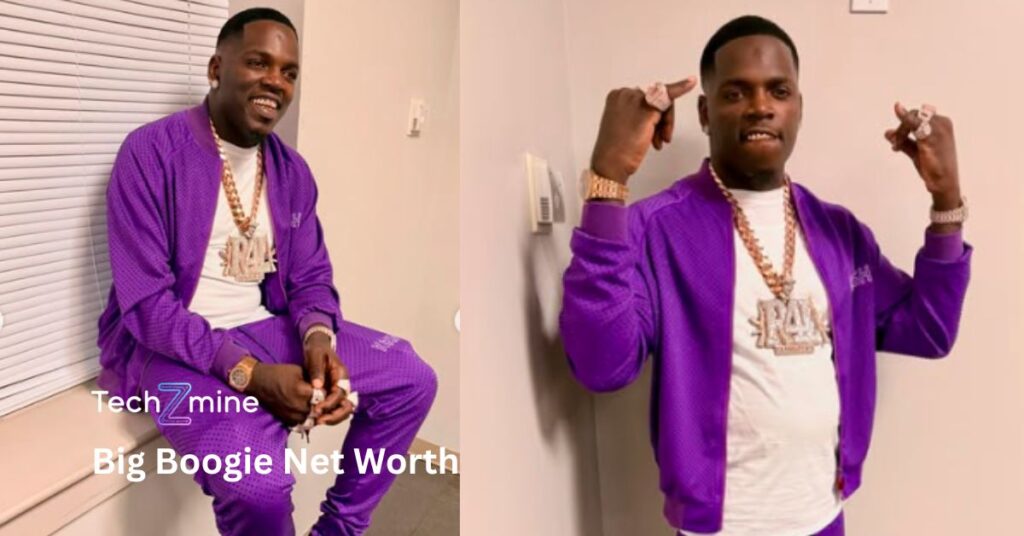
Big Boogie, whose real name is John Lotts, is a popular rapper from Louisiana, United States. He now lives in Memphis, Tennessee, where he has built his music career. Known for his Hip Hop and Southern Rap style, Big Boogie started making music in 2016 and rose to fame with hits like “Mental Healing” and “Thuggin.”
The main source of Big Boogie’s wealth comes from his music, including streaming, album sales, and live performances. He also earns from merchandise, brand deals, and social media, which together contribute to his growing success. Fans curious about his financial standing often search for Big Boogie Net Worth, which reflects his achievements and earnings in the music industry.
Who Is Big Boogie? Unmasking the Stage Name and Real Identity
At first glance, Big Boogie might sound like a catchy stage name picked for the spotlight. But behind the moniker stands John Lotts, a rapper with layers of grit, lyrical depth, and a story that echoes many young artists from the United States.
Born on November 4, 1996, John grew up in Louisiana, where music and street culture blended into his earliest influences. Those early years, rough and raw, shaped his voice — honest, unfiltered, and authentically Southern.
See Also: Violet Chang: Private Life, Family, and Quiet Influence
Profile Summary
| Attribute | Fact |
|---|---|
| Real Name | John Lotts |
| Stage Name | Big Boogie |
| Born | November 4, 1996 |
| Age (2026) | 30 years old |
| Birthplace | Louisiana, United States |
| Current Base | Memphis, Tennessee |
| Music Genre | Hip Hop, Southern Rap, Trap |
| Height | 5 ft 11 in (180 cm) |
| Weight | 176 lbs (80 kg) |
| Nationality | American |
Every figure here matters because it helps paint the full picture of the man behind the mic — not just the rapper.
Big Boogie’s Early Life & Musical Roots
Before the fame. Before the tours. Before the Collective Music Group (CMG) deal with Yo Gotti, Big Boogie was a kid with a voice and a story.
Growing up in Louisiana, John faced hardships — economic challenges, community pressures, and the hard realities of pursuing art in environments with limited support systems. As he often mentions in tracks like “Life Story”, his early life wasn’t easy.
Yet, those struggles didn’t crush his ambitions. They fueled them.
Louisiana’s vibrant musical heritage — from blues to bounce — seeped into John’s creative veins. That early exposure helped him develop a sound that wasn’t just another rapper copycat. It was deeply rooted in Southern culture and expressive of real emotions.
Career Beginnings: From Independent Mixtapes to Street Buzz (2016–2018)
John Lotts started putting music out in 2016. Independent mixtapes like “Life Story” and “Underrated” worked like underground calling cards. They didn’t skyrocket him to fame immediately. But they did something almost as important: they established him as a voice worth listening to.
His early tracks carried two traits that would become his trademarks:
- Authentic storytelling — nothing felt fake, staged, or manufactured.
- Resilience through vulnerability — he spoke about real pain, real ambition, real life.
Music critics and fans alike began to notice something different. Big Boogie didn’t rap about struggles — he lived them, then articulated them with precision.
That indie buzz caught the attention of Yo Gotti. By 2018, Big Boogie signed with Collective Music Group (CMG), officially stepping into the mainstream rap arena.
The Big Break: “Mental Healing” and Climbing the Charts (2021)
Not all breakthroughs come overnight. But when they hit, they hit hard.
For Big Boogie, that track was “Mental Healing” — released in 2021. It wasn’t just another song. It became the sonic signature that introduced millions to his raw talent.
Here’s what made it special:
- Relatable vulnerability — tackling emotional recovery.
- Clean production — CMG’s backing lifted the sound quality.
- Strong narrative — not just lyrics, but a story listeners could live with.
Tracks like “Thuggin” and “Final Nightmare” soon followed, each adding layers to his growing reputation. It wasn’t long before streaming numbers climbed into the millions across platforms like Spotify, YouTube, and TikTok.
Read Also: Candace Owens Husband: Net Worth, Family, Age, Career & Untold Facts
Big Boogie 2026 Net Worth: The Big Picture
As of 2026, Big Boogie’s net worth stands at over $5 million+.
That’s a big number, but it’s important to understand how that figure was built. It didn’t come from one hit, one concert, or a lucky break. It comes from multiple revenue streams working together.
Let’s break down how Big Boogie earns his money in 2026.
Revenue Breakdown: How Big Boogie Makes His Money
1. Music Sales & Streaming ($800K – $1.2M)
Streaming isn’t a one-dollar-per-play game — but if you hit millions of streams on platforms like Spotify and YouTube, numbers add up fast.
- Spotify: 3M+ monthly listeners
- YouTube: 964K+ subscribers
- TikTok: 1.6M+ followers
With consistent monthly listeners, recurring royalties can vault into seven figures yearly.
Streaming alone contributes between $800,000 – $1.2 million per year, primarily from:
- Song plays
- Playlist rotations
- Video monetization
2. Live Performances & Tours ($600K – $900K)
Live shows are where rappers often make their real money. Big Boogie has taken every opportunity to perform — from club dates to headline shows.
When you factor in:
- Ticket sales
- Venue cuts
- Merchandise sold at shows
…it’s easy to see how live performances bring in $600,000 – $900,000+ annually.
3. Merchandise Sales ($200K – $400K)
Anything with his name on it — t‑shirts, hoodies, caps — sells well. Merchandise becomes especially lucrative on tours, where fans are already in spending mode.
Some merch items — limited edition drops — sell out fast, boosting revenue.
4. Brand Endorsements ($300K – $500K)
Big Boogie doesn’t just drop music — he drops brand deals too.
Brands looking to tap into his growing influence often partner with him for:
- Social campaigns
- Product launches
- Sponsored content
These deals average $300,000 – $500,000+ yearly.
5. Social Media Revenue ($150K – $250K)
With strong platforms across Instagram, Facebook, TikTok, YouTube, and Twitter/X, sponsored posts, ad revenue, and collaborations generate another reliable income stream.
6. Investments & Assets ($400K – $600K)
Beyond music, Big Boogie invests smartly:
- Real estate holdings in Tennessee
- Stocks in select companies
- Business ventures
These assets contribute to his net worth while appreciating in value.
7. Songwriting Royalties ($100K – $200K)
Whenever someone streams, samples, or licenses his music, Big Boogie earns royalties. Even tracks released years ago still pay out.
Summary Table: Big Boogie’s Income Streams (2026)
| Revenue Source | Annual Range |
|---|---|
| Music Sales & Streaming | $800K – $1.2M |
| Live Performances & Tours | $600K – $900K |
| Merchandise Sales | $200K – $400K |
| Brand Endorsements | $300K – $500K |
| Social Media Monetization | $150K – $250K |
| Investments & Assets | $400K – $600K |
| Songwriting Royalties | $100K – $200K |
Why This Matters: Understanding the Money Behind the Music
Many people think a rapper’s worth is just about record sales. That’s a myth.
Big Boogie’s success story shows how diversifying revenue leads to sustainable wealth. He doesn’t rely on one song or one platform. Instead, he has created:
- Multiple income funnels
- Brand equity
- Long-term financial growth
It’s the kind of strategy financial advisors reference when talking about portfolio building.
In a way, his earning methods are similar to what Rick Macci achieved in tennis coaching — creating value through multiple channels, not just one lesson or one student.
Big Boogie’s Personal Life & Lifestyle
Life in the spotlight changed a lot for John Lotts, but it didn’t change who he is at the core.
Here’s what we know about his life offstage:
- He is a father — a role he speaks about with pride in interviews.
- He lives primarily in Memphis, Tennessee — a city central to his music and culture.
- He enjoys luxury vehicles like Lamborghini and Rolls-Royce models.
- His fashion and jewelry game reflects both Southern culture and hip hop style.
Despite financial success, he often stresses financial discipline — investing smartly and avoiding reckless spending.
Social Media Presence: A Power Asset
Social engagement isn’t just about likes and comments — it’s currency.
Here’s a snapshot of his digital influence:
- Instagram: 1.4M+ followers
- TikTok: 1.6M+ followers
- Spotify: 3M+ monthly listeners
- Facebook: 579K+ followers
- YouTube: 964K+ subscribers
- Twitter/X: Growing audience
These platforms extend his reach and multiply monetization options through brand partnerships, sponsored content, and direct fan engagement.
Big Boogie Net Worth vs. Other Celebrities
Let’s compare him to other figures from entertainment and sports — not to belittle anyone, but to contextualize his current standing.
| Celebrity | Estimated Net Worth |
|---|---|
| Big Boogie | $5M+ |
| Andrew Santino | ~$4M-$6M |
| Cal McNair | ~$3M-$5M |
| Henry Cho | ~$2M-$4M |
| John Teets | ~$3M |
| Katie Britt | ~$1M-$2M |
| Salish Matter | ~$2M-$3M |
| Sky Bri | ~$2M-$3M |
| Sophie Rain | ~$1M-$2M |
This table shows Big Boogie’s position among notable figures in entertainment and public influence — and his ability to compete financially with peers.
Future Growth: What’s Next for Big Boogie’s Net Worth?
If 2021–2026 taught us anything, it’s this:
Big Boogie doesn’t stand still.
Here are key reasons his net worth is likely to grow:
- More music releases: New albums and singles keep revenue flowing.
- Bigger tours: Higher ticket sales, larger venues, international dates.
- Brand deals: As his influence expands, so do sponsorship opportunities.
- Business ventures: Smart investments in tech, fashion, or media could unlock new wealth.
- Streaming growth: More listeners = more royalties.
All these factors paint a future where his net worth could easily exceed $7M–$10M within a few years.
Final Thoughts
Big Boogie’s journey from Louisiana to the national stage isn’t just a success story — it’s a blueprint for emerging artists aiming to build wealth, not just fame.
He stands at the intersection of authentic storytelling, financial strategy, and brand expansion. His net worth in 2026 reflects not only how far he’s come but where he’s headed next.
Whether you’re an aspiring artist, a music industry follower, or someone curious about rapper net worth dynamics, Big Boogie’s trajectory offers lessons in hustle, smart monetization, and long-term vision.
Frequently Asked Questions
What is Big Boogie’s net worth in 2025–2026?
Big Boogie’s estimated net worth is over $5 million as of 2026, built through music sales, streaming, live shows, brand deals, and investments.
How old is Big Boogie in 2026?
He is 30 years old, born on November 4, 1996.
What is Big Boogie’s real name?
His real name is John Lotts.
How tall is Big Boogie?
Big Boogie stands at approximately 5 feet 11 inches (180 cm) and weighs around 176 lbs (80 kg).
Where is Big Boogie originally from?
He was born in Louisiana, United States, and is currently based in Memphis, Tennessee.
When did Big Boogie start his music career?
He began releasing music independently around 2016, gaining early recognition through mixtapes.
Which record label is Big Boogie signed to?
He is signed to Collective Music Group (CMG), founded by rapper Yo Gotti.
Does Big Boogie have children?
Yes, Big Boogie is a father, though he keeps details about his children private.
What was Big Boogie’s breakthrough song?
His major breakthrough came with “Mental Healing” (2021), which significantly boosted his popularity.
How does Big Boogie make his money?
His income comes from multiple streams, including:
- Music streaming and sales
- Live performances and tours
- Merchandise sales
- Brand endorsements
- Social media monetization
- Investments and royalties